

How To Calculate Your Marginal Tax Rate In Canada (2026)
Your marginal tax rate is the tax on your next dollar. See the 2026 federal and Ontario brackets and a worked example for an Ontario earner at $85,000.
Paste it into ChatGPT or Claude to ask questions about it.
Updated Facts checked SourcesView As Markdown
Your marginal tax rate answers one question. If you earn one more dollar, how much of it goes to income tax? It’s the number you need to judge a raise, a side gig or an RRSP contribution. Here’s how to work it out for 2026, with a full example for someone in Ontario.
What It Is
Canada taxes income in brackets. Each bracket has its own rate, and each rate only applies to the part of your income inside that bracket. Your marginal rate is the rate on the bracket your last dollar lands in.
You pay two income taxes at once. One goes to the federal government and one goes to your province. Both use brackets, and the lines don’t sit at the same incomes. So your combined marginal rate is your federal rate plus your provincial rate at the same income.
Key Rules
These are the 2026 brackets the CRA and Ontario publish. Each rate applies to the part of your taxable income in that range.
Federal, 2026
- Up to $58,523: 14%
- $58,523 to $117,045: 20.5%
- $117,045 to $181,440: 26%
- $181,440 to $258,482: 29%
- Over $258,482: 33%
Ontario, 2026
- Up to $53,891: 5.05%
- $53,891 to $107,785: 9.15%
- $107,785 to $150,000: 11.16%
- $150,000 to $220,000: 12.16%
- Over $220,000: 13.16%
Federal And Ontario Brackets, 2026
Two bars on the same income axis from $0 to $300,000. Federal 2026 brackets: 14% up to $58,523, 20.5% up to $117,045, 26% up to $181,440, 29% up to $258,482, 33% up to any income. Ontario 2026 brackets: 5.05% up to $53,891, 9.15% up to $107,785, 11.16% up to $150,000, 12.16% up to $220,000, 13.16% up to any income. The bracket lines fall at different incomes.
Put them together and you get the combined rates for an Ontario resident. This table is before the Ontario surtax and before any credits.
| 2026 Taxable Income | Federal | Ontario | Combined |
|---|---|---|---|
| Up to $53,891 | 14% | 5.05% | 19.05% |
| $53,891 to $58,523 | 14% | 9.15% | 23.15% |
| $58,523 to $107,785 | 20.5% | 9.15% | 29.65% |
| $107,785 to $117,045 | 20.5% | 11.16% | 31.66% |
| $117,045 to $150,000 | 26% | 11.16% | 37.16% |
| $150,000 to $181,440 | 26% | 12.16% | 38.16% |
| $181,440 to $220,000 | 29% | 12.16% | 41.16% |
| $220,000 to $258,482 | 29% | 13.16% | 42.16% |
| Over $258,482 | 33% | 13.16% | 46.16% |
2026 Combined Marginal Rate In Ontario
FederalOntario
Stacked step chart of the 2026 combined federal and Ontario marginal rate by taxable income: Up to $53,891, 14% federal plus 5.05% Ontario, 19.05% combined. $53,891 to $58,523, 14% federal plus 9.15% Ontario, 23.15% combined. $58,523 to $107,785, 20.5% federal plus 9.15% Ontario, 29.65% combined. $107,785 to $117,045, 20.5% federal plus 11.16% Ontario, 31.66% combined. $117,045 to $150,000, 26% federal plus 11.16% Ontario, 37.16% combined. $150,000 to $181,440, 26% federal plus 12.16% Ontario, 38.16% combined. $181,440 to $220,000, 29% federal plus 12.16% Ontario, 41.16% combined. $220,000 to $258,482, 29% federal plus 13.16% Ontario, 42.16% combined. Over $258,482, 33% federal plus 13.16% Ontario, 46.16% combined. At $85,000 the combined rate is 29.65%.
What The 20% Surtax Does To Ontario's 9.15%
Ontario rate20% surtax on it
Below the surtax line, the Ontario rate in this bracket is 9.15%. Above it, the 20% surtax adds a fifth, 1.83 points, so the rate acts like 10.98%.
Three more things can move the real number:
- The Ontario surtax. Ontario charges 20% of your basic Ontario tax over $5,818, plus 36% of your basic Ontario tax over $7,446. For someone who only claims the basic personal amount, the 20% part starts at about $95,000 of taxable income. Above that line, the Ontario rate of 9.15% acts more like 10.98%, because 9.15% plus a fifth of it is 10.98%.
- The Ontario Health Premium. It’s charged with your income tax and tops out at $900. It phases in over a few short income bands. Inside those bands, each extra dollar of income adds to the premium too.
- Credits. The basic personal amount and other credits lower your total tax. Most of them don’t change the rate on your next dollar, but they decide where the surtax kicks in.
A Worked Example
Maya lives in Ontario. Her taxable income for 2026 is $85,000. Here’s how to find her marginal rate in three steps.
Step 1. Find the federal bracket. $85,000 is between $58,523 and $117,045. Her federal marginal rate is 20.5%.
Step 2. Find the Ontario bracket. $85,000 is between $53,891 and $107,785. Her Ontario marginal rate is 9.15%.
Step 3. Add them and check the surtax. 20.5% plus 9.15% is 29.65%. With only the basic personal amount, Maya’s basic Ontario tax is about $4,912. That’s under the $5,818 surtax line, so there’s no surtax. Her health premium is already at its $750 cap for her income band, so it doesn’t change either. Her marginal rate is 29.65%.
Maya's $85,000, Slice By Slice
| Slice Of Income | Combined Rate | Tax On The Slice |
|---|---|---|
| First $53,891 | 19.05% | $10,266.24 |
| Next $4,632 | 23.15% | $1,072.31 |
| Last $26,477 | 29.65% | $7,850.43 |
| $85,000 | $19,188.98 |
Maya's Marginal Rate In Three Steps
- Find the federal bracket$85,000 is between $58,523 and $117,04520.5%
- Find the Ontario bracket$85,000 is between $53,891 and $107,7859.15%
- Add them and check the surtaxBasic Ontario tax of about $4,912 is under the $5,818 surtax line29.65%
Now use it.
- A $1,000 raise. $1,000 times 29.65% is $296.50 of extra income tax. Maya keeps $703.50 of the raise after income tax.
- A $5,000 RRSP contribution. The deduction drops her taxable income from $85,000 to $80,000. That stays in the same combined bracket, so the whole $5,000 saves tax at 29.65%. That’s $1,482.50 less tax.
Where Maya's $1,000 Raise Goes
Kept, $703.50Income tax, $296.50
Of a $1,000 raise, Maya keeps $703.50 after income tax and pays $296.50 at her 29.65% marginal rate.
If Maya earned $120,000 instead, her rate would be different. Federal would be 26% and Ontario would be 11.16%, plus the surtax. The same steps still work. Find each bracket, add the rates, then check the surtax.
Maya At $85,000 And At $120,000
FederalOntario
At $85,000, Maya's combined rate is 20.5% federal plus 9.15% Ontario, 29.65%. At $120,000 it is 26% plus 11.16%, 37.16%, before the Ontario surtax.
Common Mistakes
- Thinking a raise can lower your take-home pay. Brackets only tax the dollars above each line at the higher rate. A raise always leaves you with more after income tax.
- Using the marginal rate to guess your total tax. The marginal rate only applies to the last dollar. Your total tax is much lower. Use your average tax rate for that.
- Forgetting the provincial part. The federal rate alone understates your tax. Always add your province.
- Ignoring the surtax in Ontario. Above roughly $95,000, the surtax pushes the Ontario rate up. A table without it will look too low.
- Assuming a deduction saves tax at one rate when it crosses a bracket. A big RRSP contribution can drop you into a lower bracket partway through. The part below the line saves tax at the lower rate.
- Treating every kind of income the same. Only half of a capital gain is taxed, so its effective rate is about half your marginal rate. See capital gains tax.
What's Left After Income Tax, Ontario 2026
Taxable incomeLeft after income tax
Line chart of taxable income from $20,000 to $150,000 in Ontario for 2026, and what is left after income tax. The after-tax line rises the whole way, from $19,149 at $20,000 to $108,374 at $150,000. At $85,000, about $68,020 is left.
How Maple Budget Helps
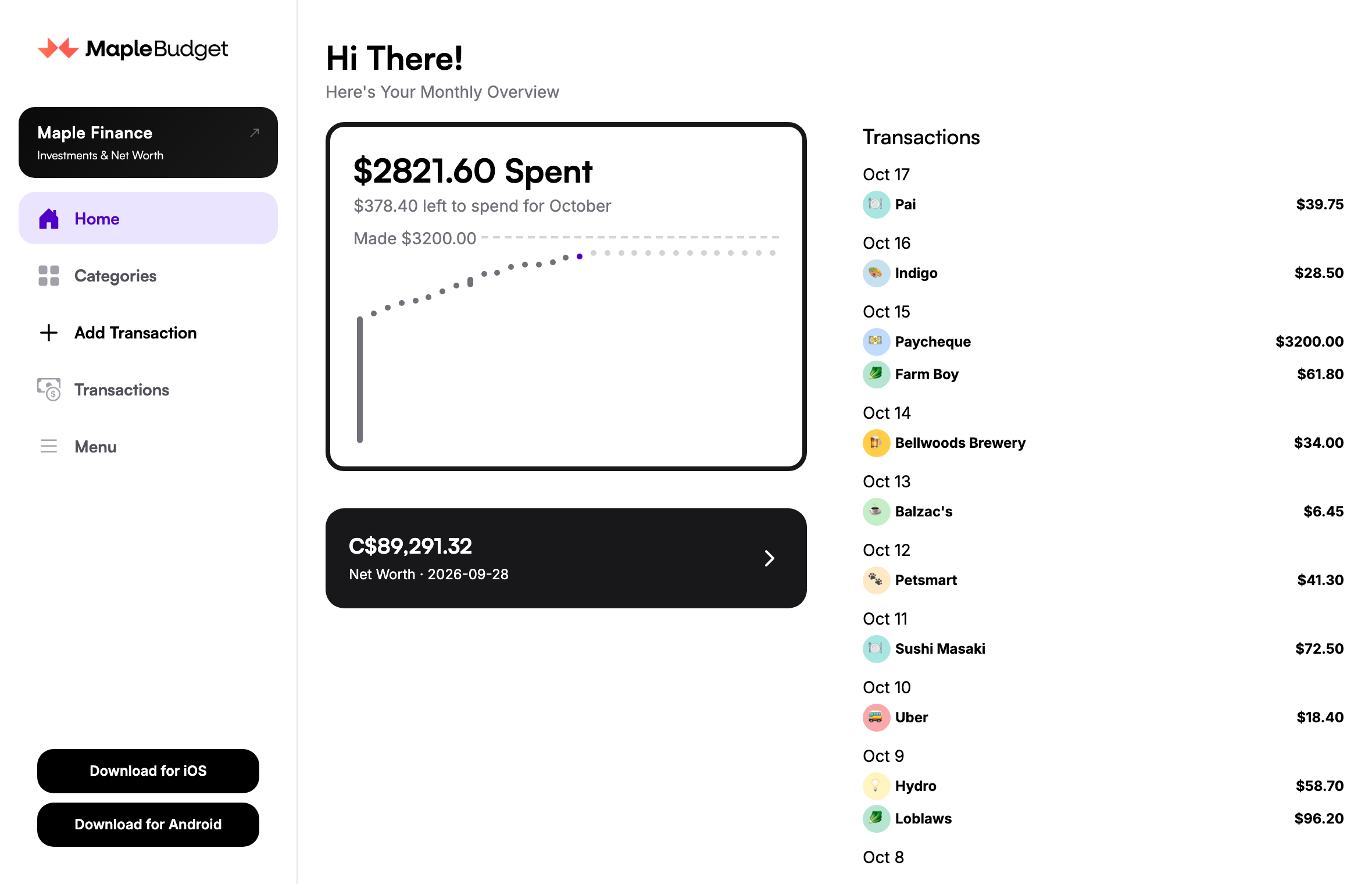
Maple Budget doesn’t calculate your tax bracket. It does help you plan around it. When you sign up, Maple asks for your monthly take-home pay and builds a starter budget from it, split 50% needs, 30% wants and 20% savings. Your take-home pay is what’s left after tax, so that plan starts from the real number. See the 50/30/20 budget.
Each month, Maple shows your income against your spending, so you can see what a raise actually changes. If you’re weighing an RRSP contribution, the Taxes page on the web keeps your RRSP room and logged contributions in one place. It also estimates the capital gains on your taxable investment accounts, with the Net Capital Gain and the Taxable (50%) part that gets added to your income. You can also ask Maple about your own spending and income in plain words.
This is general information, not tax, legal or financial advice. Your own numbers depend on your situation, so check with the CRA or an accountant before you act.
Common Questions
What Is The Marginal Tax Rate In Ontario At $85,000?
For 2026, it's 29.65% before any surtax or credits. That's the federal rate of 20.5% plus the Ontario rate of 9.15%. Every extra dollar of regular income at that level costs about 29.65 cents in income tax.
Does Moving Into A Higher Bracket Mean All My Income Is Taxed More?
No. Only the part of your income above the bracket line is taxed at the higher rate. The rest is still taxed at the lower rates. A raise never leaves you with less after income tax.
Why Does Ontario Have A Surtax?
Ontario adds a surtax once your basic Ontario tax passes a set amount. For 2026, it's 20% of basic Ontario tax over $5,818, plus 36% of basic Ontario tax over $7,446. It raises the Ontario part of the marginal rate for higher earners.
Is My Marginal Rate The Same As The Tax I Pay?
No. Your marginal rate is the rate on your next dollar. Your average rate is your total tax divided by your income, and it's always lower. See marginal vs average tax rate.
Sources
Every number on this page was checked against these official pages.
- Tax Rates And Income Brackets For Individuals, Current Year (CRA), checked November 16, 2026
- Personal Income Tax Rates And Credits, 2026 (Ontario Data Catalogue), checked November 16, 2026
- T4032ON Payroll Deductions Tables, Ontario, General Information (CRA), checked November 16, 2026
Try It In Maple Budget
Budgeting is free on iPhone, Android and the web. One account works everywhere.