

How Credit Card Interest Works In Canada
Pay your full balance by the due date and you pay no interest on purchases. Carry a balance and interest adds up daily. Here's how it works in Canada.
Paste it into ChatGPT or Claude to ask questions about it.
Updated Facts checked SourcesView As Markdown
On a Canadian credit card, you pay no interest on purchases if you pay the full balance by the due date. Federally regulated card issuers must give you at least 21 days after each statement to do that. If you leave any balance, interest is charged on it at your card’s annual rate, usually worked out on your daily balance and added each month, until you pay it all off. Cash advances and balance transfers get no grace period at all.
What It Is
A credit card is a loan you can reuse. Every month you get a statement showing what you owe and a due date. Your interest rate is shown as a yearly percentage. The Financial Consumer Agency of Canada (FCAC) uses 19% on purchases and 22% on cash advances as an example.
The key idea is the grace period. It’s the time between the end of your billing cycle and your payment due date. Pay the whole balance inside it and those purchases cost you nothing extra. Miss it, even by a little, and interest applies.
One Billing Cycle And Its Grace Period
- Day 1Billing cycle starts. You buy things.
- Day 30Cycle ends and your statement is made.
- Day 51Due date, at least 21 days later. Pay in full: no interest on those purchases.
Grace period, at least 21 days
Day 1: Billing cycle starts. You buy things.. Day 30: Cycle ends and your statement is made.. Day 51: Due date, at least 21 days later. Pay in full: no interest on those purchases.. Grace period, at least 21 days.
Key Rules
- At least 21 days to pay. Under the Bank Act, a federally regulated issuer can’t make your payment due less than 21 days after the billing cycle ends. If the due date isn’t a business day, paying on the next business day counts as on time.
- Pay in full, no interest on purchases. The Bank Act says the issuer can’t charge interest on that cycle’s purchases if you pay the full balance by the due date.
- Leave a balance, pay interest. The FCAC says you’ll pay interest if you don’t pay in full by the due date, and keep paying it until the balance is gone.
- Interest is usually daily, charged monthly. The FCAC’s model disclosure describes interest calculated on your daily average balance and charged on the last day of the billing cycle. Your card agreement has the exact method.
- No grace period on cash. Cash advances, cash-like transactions and balance transfers are charged interest from the day they happen. See cash advance fees and interest.
- Extra payments go to high rates, or evenly. Anything you pay above the minimum must go either to the highest-rate balance first or spread in proportion across your balances.
- Your statement shows the minimum-only timeline. It must estimate how long, in months and years, it would take to pay the balance with only minimum payments.
A Worked Example
Leah has a card at 19% on purchases. She carries a $2,000 balance from one month to the next.
Her card charges interest on her daily balance. One day’s interest is the yearly rate divided by 365, times the balance:
- $2,000 × 19% ÷ 365 = about $1.04 a day.
- Over a 30-day cycle, that’s about $31.23.
Her minimum payment covers that interest and a little of the balance. The rest keeps costing her about a dollar a day.
Interest Over 30 Days At 19%
$500 balance: $7.81. $1,000 balance: $15.62. $2,000 balance: $31.23. $5,000 balance: $78.08.
Now say Leah also took a $500 cash advance at 22%. That part has no grace period. Over 30 days it costs about $9.04 in interest, plus any cash advance fee.
This month Leah pays $300 and her minimum is $60. The $240 above the minimum must go either to the highest-rate balance first, which is the 22% cash advance, or across both balances in proportion. Her card agreement says which method her card uses.
Leah's Two Balances
| Balance | Amount | Rate | Interest over 30 days |
|---|---|---|---|
| Purchases | $2,000 | 19% | $31.23 |
| Cash advance | $500 | 22% | $9.04 |
| Total | $2,500 | $40.27 |
If Leah paid her whole balance by the due date each month, new purchases would cost her nothing in interest. That’s how most people use a card for free.
Common Mistakes
- Paying “most” of the balance. The grace period on purchases only works when you pay the full balance by the due date. Leave some and you pay interest.
- Using the card for cash. Cash advances start charging interest immediately, usually at a higher rate, and often with a fee.
- Missing the due date by a day. If you can’t pay in full, pay at least the minimum on time. The FCAC says to make at least the minimum payment if you can’t pay the full amount.
- Thinking 19% a year is small. It’s charged on what you owe every day. On a balance that only shrinks slowly, years of interest add up. See the minimum payment trap.
- Never reading the statement. It shows your rates, your grace period amount and how long the minimum would take.
How Maple Budget Helps
The surest way to pay no interest is to know your full balance before the due date. In Maple Budget, add each card as a payment method and pick it when you log a purchase. On iPhone and Android, filter Transactions by that card to see what you’ve put on it this month.
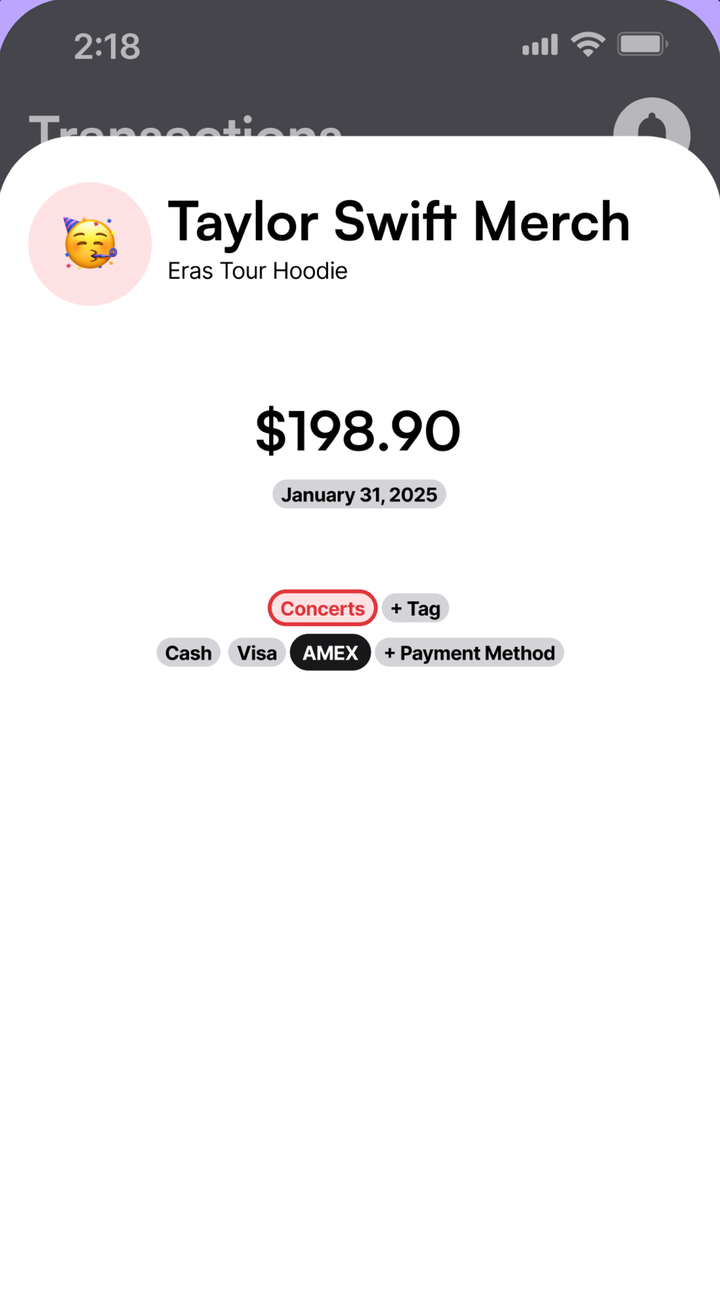
Set a monthly budget for each category so the total stays at an amount you can pay in full. Budgeting is free. With Maple Pro ($1.99 a week, 7-day free trial) you can connect your bank and cards so purchases fill in on their own. Maple leaves out card payments when it imports, so nothing counts twice.
This is general information, not tax, legal or financial advice. Your own numbers depend on your situation, so check with the CRA or an accountant before you act.
Common Questions
How Long Is The Grace Period On A Credit Card In Canada?
At least 21 days for federally regulated financial institutions. It starts on the last day of your billing period. Pay the full balance by the due date and you pay no interest on that cycle's purchases.
Do I Pay Interest If I Pay The Minimum?
Yes. Paying the minimum keeps the account in good standing, but any balance you leave is charged interest until you pay it back in full.
Is There A Grace Period On Cash Advances?
No. The FCAC says interest on a cash advance starts the day you take it and runs until you pay it back. The same goes for balance transfers and cash-like transactions.
Where Do My Payments Go If I Have Different Rates?
The part of your payment above the minimum must go either to the highest-rate balance first, or across all balances in proportion. Your card agreement says which.
Sources
Every number on this page was checked against these official pages.
- How Credit Cards Work (FCAC), checked November 17, 2026
- Paying Off Your Credit Card (FCAC), checked November 17, 2026
- Credit Card Information Box Example (FCAC), checked November 17, 2026
- Bank Act, Sections 627.34 And 627.35 (Justice Laws), checked November 17, 2026
- Financial Consumer Protection Framework Regulations, Section 66 (Justice Laws), checked November 17, 2026
Try It In Maple Budget
Budgeting is free on iPhone, Android and the web. One account works everywhere.