

Debt Snowball Vs Debt Avalanche
The snowball pays your smallest debt first. The avalanche pays your highest-rate debt first. Here's how each works, what each costs and how to pick one.
Paste it into ChatGPT or Claude to ask questions about it.
Updated Facts checked SourcesView As Markdown
The debt snowball pays off your smallest balance first. The debt avalanche pays off your highest interest rate first. Both keep the minimum going on every other debt. The Financial Consumer Agency of Canada (FCAC) describes both as the two main ways to decide which debt to pay first. The avalanche costs less in interest. The snowball gives you a win sooner. Either one beats paying a little extra on everything at once.
What It Is
Both are ways to decide where your extra money goes when you owe on more than one thing. Say you owe on two credit cards and a line of credit. Each one has a minimum payment. After you pay all the minimums, you have some money left over each month. The question is which debt gets that extra.
- Snowball. List your debts from smallest balance to largest. Put all the extra on the smallest one. When it’s gone, add what you were paying on it to the next smallest. The payment grows like a snowball rolling downhill.
- Avalanche. List your debts from highest interest rate to lowest. Put all the extra on the highest rate. When it’s gone, roll that payment onto the next highest rate.
The only difference is the order. The monthly amount you pay is the same.
Key Rules
- Always pay every minimum. The FCAC says to keep making the minimum payments on all your debts. Missing a minimum can bring late fees, a higher rate and a mark on your credit report. Both methods depend on this.
- Pick one monthly amount and keep it. The method works because the money freed up by a paid-off debt rolls to the next one. If you spend it instead, the snowball stops.
- Stop adding new debt. Paying down a card while still using it for new spending makes the target move. Many people put cards away while they work through the list.
- Rates matter more than balances for cost. Interest is charged on what you owe at each debt’s rate. Money aimed at a 29.99% card saves more than money aimed at a 9.95% line of credit.
- Look at your real rates. Your statement shows the rate for purchases, and often a different, higher rate for cash advances. Use the rate on the balance you actually carry.
A Worked Example
Priya owes on three things. She can put $700 a month toward debt in total.
Priya's Three Debts
| Debt | Balance | Rate | Minimum |
|---|---|---|---|
| Line of credit | $1,500 | 9.95% | $50 |
| Store card | $2,500 | 29.99% | $75 |
| Visa | $7,000 | 20.99% | $210 |
| Total | $11,000 | $335 |
Snowball order: line of credit ($1,500), then store card ($2,500), then Visa ($7,000).
Avalanche order: store card (29.99%), then Visa (20.99%), then line of credit (9.95%).
We worked it out month by month, with interest at each rate divided by 12. Real cards charge interest daily, so real totals land a little differently.
Months Until Each Debt Is Paid Off
SnowballAvalanche
Line of credit (Snowball): Month 4. Store card (Snowball): Month 10. Visa (Snowball): Month 19. Store card (Avalanche): Month 7. Visa (Avalanche): Month 18. Line of credit (Avalanche): Month 19.
Both plans make Priya debt-free in 19 months, because she pays the same $700 either way. The cost is different.
Priya's Total Debt, Paying $700 A Month
SnowballAvalanche
| Snowball | 1 year and 7 months, $2,098.10 interest |
| Avalanche | 1 year and 7 months, $1,833.25 interest |
Total debt of $11,000 paid with $700 a month. Snowball: debt-free in 1 year and 7 months with $2,098.10 of interest. Avalanche: debt-free in 1 year and 7 months with $1,833.25 of interest.
- Snowball: $2,098.10 of interest.
- Avalanche: $1,833.25 of interest.
The avalanche saves her $264.85. The snowball gives her a paid-off debt three months sooner, and two of her three debts are gone by month 10. Neither answer is wrong. If Priya knows she gets discouraged, the snowball’s early win may be worth $264.85 to her.
Interest Priya Pays, Same $700 A Month
Snowball (Smallest balance first): $2,098.10. Avalanche (Highest rate first): $1,833.25.
The gap grows when the rates are further apart, the balances are bigger or the budget is tighter. If your smallest debt also has your highest rate, the two methods are the same plan.
Common Mistakes
- Spreading the extra across every debt. A little extra on everything feels fair, but nothing gets paid off quickly and no payment gets freed up to roll forward.
- Spending the freed-up payment. When a debt is gone, the payment you made on it is the fuel for the next one. Move it, don’t spend it.
- Using the cards again. If a paid-off card fills back up, you’re back where you started. Keep the account open if you like, but stop spending on it.
- Ignoring a promotional rate that’s ending. A balance transfer at a low rate becomes a high-rate debt when the promotion ends. Move it up the list before then.
- Forgetting about a cheaper rate. Sometimes the best first step is to ask for a lower interest rate or look at a consolidation loan. A lower rate helps either method.
How Maple Budget Helps
Both methods need one thing: the same extra money every month. Maple Budget is where you find it. Set a monthly budget for each category and watch the bars, so you know what’s left over before the month ends.
Payments on loans and lines of credit can go in the Loans category. Add each one as a recurring transaction set to Monthly, and Maple adds it on the due date so your budget always counts it. When a debt is paid off, stop that recurring payment and raise the next one by the same amount. Card purchases already show up one by one, so track a card’s progress on its statement rather than logging the payment as spending.
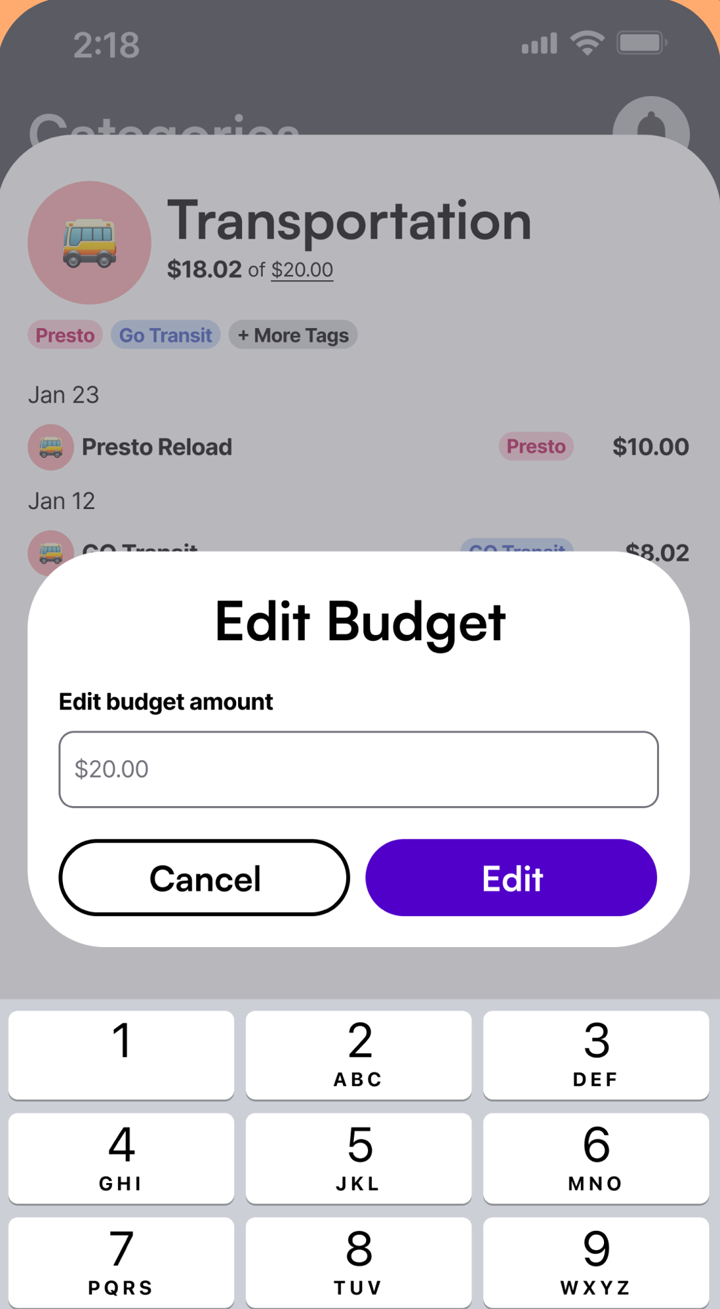
Budgeting in Maple is free. With Maple Pro ($1.99 a week, 7-day free trial) you can connect your bank and your card purchases fill in on their own.
This is general information, not tax, legal or financial advice. Your own numbers depend on your situation, so check with the CRA or an accountant before you act.
Common Questions
Which Saves More Money, Snowball Or Avalanche?
The avalanche, almost always. Paying the highest-rate debt first means less of your money goes to interest. In our example it saved $264.85 over the snowball with the same monthly budget.
Is The Snowball Method A Bad Idea?
No. It costs a bit more, but early wins keep many people going. A plan you stick with beats a cheaper plan you give up on.
Do I Stop Paying My Other Debts?
No. With both methods you keep paying at least the minimum on every debt. Only the extra money goes to one target at a time.
What If Two Debts Have The Same Rate?
Then the two methods agree for those debts. Pay the smaller one first and you free up its minimum sooner.
Sources
Every number on this page was checked against these official pages.
- Paying Down Your Debt (FCAC), checked November 17, 2026
- Paying Off Your Credit Card (FCAC), checked November 17, 2026
Try It In Maple Budget
Budgeting is free on iPhone, Android and the web. One account works everywhere.